
Introduction
The impact of interest-rate cuts on the stock market is a topic of great interest to both seasoned and new investors. When central banks lower policy rates, many assume it’s a green flag for equities. While that assumption often holds, the reality is more nuanced. Impact of interest-rate cuts on the stock market appears at the heart of this discussion. In this blog we’ll explore how rate cuts affect valuation, sentiment, sector performance and what investors should keep in mind.
What is an Interest-Rate Cut?
An interest-rate cut refers to a central bank (such as the Federal Reserve in the U.S., or for India the Reserve Bank of India) reducing its benchmark policy interest rate. This decision typically aims to stimulate economic activity by making borrowing cheaper for consumers and businesses.
When the central bank initiates an interest-rate cut, it sets off a chain of effects: lower borrowing costs, increased spending and investment, and potential changes in savings and fixed-income returns. All of these feed into the stock market, which is why the impact of interest-rate cuts on the stock market is so critical.

How Does the Interest-Rate Cut Influence the Stock Market?
Here are the major channels through which interest-rate cuts affect the stock market:
1 Cheaper Borrowing → Potential Earnings Boost
Lower rates reduce companies’ debt servicing costs and make new capital cheaper. According to Investopedia:
“A reduction in interest rates will prompt investors to move money from the bond market to the equity market. The influx of new capital causes the equity market to rise.” (Investopedia)
Lower discount rates also mean future cash flows from companies become more valuable.

2 Shift from Fixed Income to Equities
When rates drop, investors get less return from bonds and savings. That can drive more funds toward stocks, increasing demand.
3 Valuation Effects
Lower interest rates reduce the discount rate used to value future earnings, boosting valuations if other factors hold.
4 Sentiment and Liquidity Boost
Rate cuts often signal accommodative central bank policy and may encourage more risk-taking. For example:
“Rate cuts historically have been positive for stocks … we see no reason to expect this time would be different.”
Also in India:
“Many rate‐sensitive sectors like banking, NBFC and real estate are directly impacted… rate cuts will boost market liquidity, which in return will favour equities.”

Why Interest-Rate Cuts May Not Always Be Bullish
It may surprise some investors, but the impact of interest-rate cuts on the stock market can sometimes be negative—or at least more complex than “cut rates = stocks up”.
You may also like:
1 Cuts May Signal Weak Economy
Rate cuts often happen when growth is faltering. That pessimistic underlying macro backdrop can offset the positives. For example:
“Interest rate cuts aren’t always good for stocks in the short term… The assumption is that consumers and businesses will increase spending when the Fed announces a cut. But often the cut is a reaction to weakness.”
2 Timing and Valuation Matters
If valuations are already high, or the economy vulnerable, a rate cut might not unlock much upside. A historical study:
“Since 1970, more than half of the Fed’s first cuts were followed by declines in the S&P 500 ranging from -22.6% to -55.5%.”
Thus investors need to consider context, not just the headline.
3 “Sell the News” Risk
Sometimes markets are already expecting cuts (priced-in) so when the cut happens, it triggers a short-term pull-back. JPMorgan warns that a rate cut could be a “sell the news” event.
Sector-Wise Impact of Interest-Rate Cuts
Different sectors respond differently to the impact of interest-rate cuts on the stock market:
- Financials/Banking: Initially might see margin pressure (because deposit/loan spreads shrink). However, if cuts spur lending, benefit may follow. In India: banking & realty stocks recovered ahead of expected rate cut. (ET Now)
- Real Estate & Construction: Benefit due to cheaper housing finance and higher sales.
- Growth/Technology: Benefit from lower discount rates, but sensitive to earnings and macro-risk.
- Consumer Discretionary: Can pick up if consumers get a boost via lower rates and higher confidence.
Essentially: rate cuts are more of a tailwind than a guarantee—sector and company fundamentals still matter.
What Investors Must Know: Strategy & Risks
If you are investing with the impact of interest-rate cuts on the stock market in mind, here are some key takeaways:
1 Don’t Assume Automatic Market Rally
While rate cuts are generally positive, they don’t guarantee immediate strong returns. Focus on fundamentals, valuations, and macro context.
2 Monitor Expectations vs Reality
The market often prices in expected cuts ahead of time. If the cut is smaller than expected, or signals caution, the reaction may be negative.
3 Focus on Quality and Fundamentals
A favourable rate environment helps, but growth, earnings, balance sheet health still drive long-term performance.
4 Watch for Timing and Valuation
If valuations are stretched, the upside may be limited even with rate cuts. Timing matters more than simply the event.
5 Use Sector Rotation
Understanding which sectors benefit most allows you to position accordingly rather than applying a blanket “buy everything” approach.
6 Keep an Eye on Global Spillovers
In a globally connected world, cuts in one region may signal concerns for others or prompt capital flows. For example: when the Fed signalled fewer cuts, Indian equities were hit.
Case Studies & Historical Evidence
1 U.S. – Federal Reserve Cycle
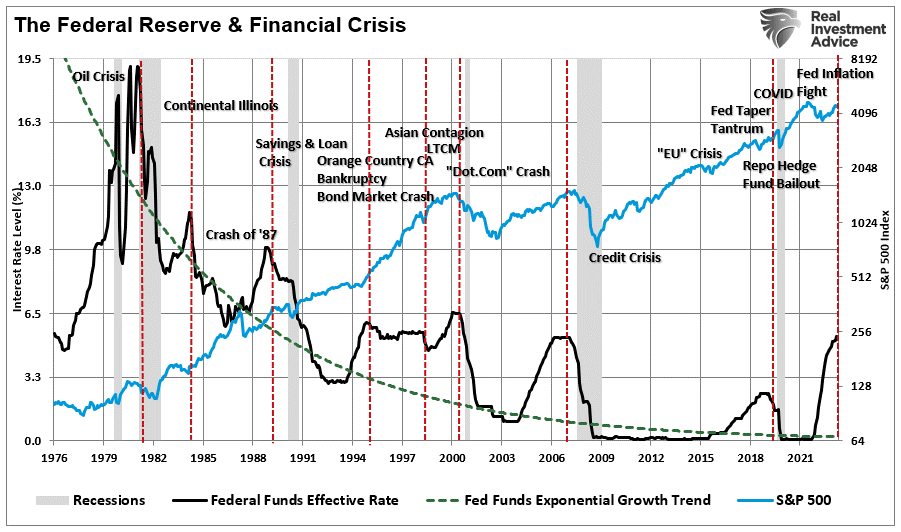
Data from the past 40 years show that after rate cuts, the S&P 500 often posts solid gains one‐year and three‐years later.
However, the start of rate‐cut cycles often coincided with market corrections.
2 India – RBI Rate Cut Scenario
In India, ahead of an anticipated 25 bps repo cut by the RBI, banking and realty stocks showed sharp recovery as markets priced in the move.
These examples highlight that the impact of interest-rate cuts on the stock market is real—but full of nuance.
Conclusion
In summary, the impact of interest-rate cuts on the stock market is a powerful theme, but it’s not a simple “cuts = rally” equation. Rate cuts provide cheaper capital, improved valuations and better risk appetite. Yet they often come at times of economic stress, and much depends on whether the market has already priced them in, how investor sentiment reads the central bank’s tone, and how valuations and earnings stack up.
For investors, the key is to use rate cuts as one factor among many: paying attention to sector dynamics, company fundamentals, global spillovers and valuation. With thoughtful positioning rather than blind faith in the cut, one can make smarter moves when monetary policy turns more accommodative.
frequently asked questions
A: No. While rate cuts often provide a positive tailwind, market response depends on context—why rates are being cut, how much, and what’s already priced in.
A: Markets typically react quickly—expectations are key. But the broader economic impact of a cut can take several months to filter through.
A: Generally banking (depending on margin dynamics), real estate, consumer discretionary and growth stocks. But each sector’s reaction depends on other factors.
A: Rather than react to the announcement, focus on valuations, fundamentals and whether the cut is expected. Timing entry is still key.
A: Yes. If a cut signals economic weakness or if it triggers a “sell the news” event, stocks may fall even as rates are cut.