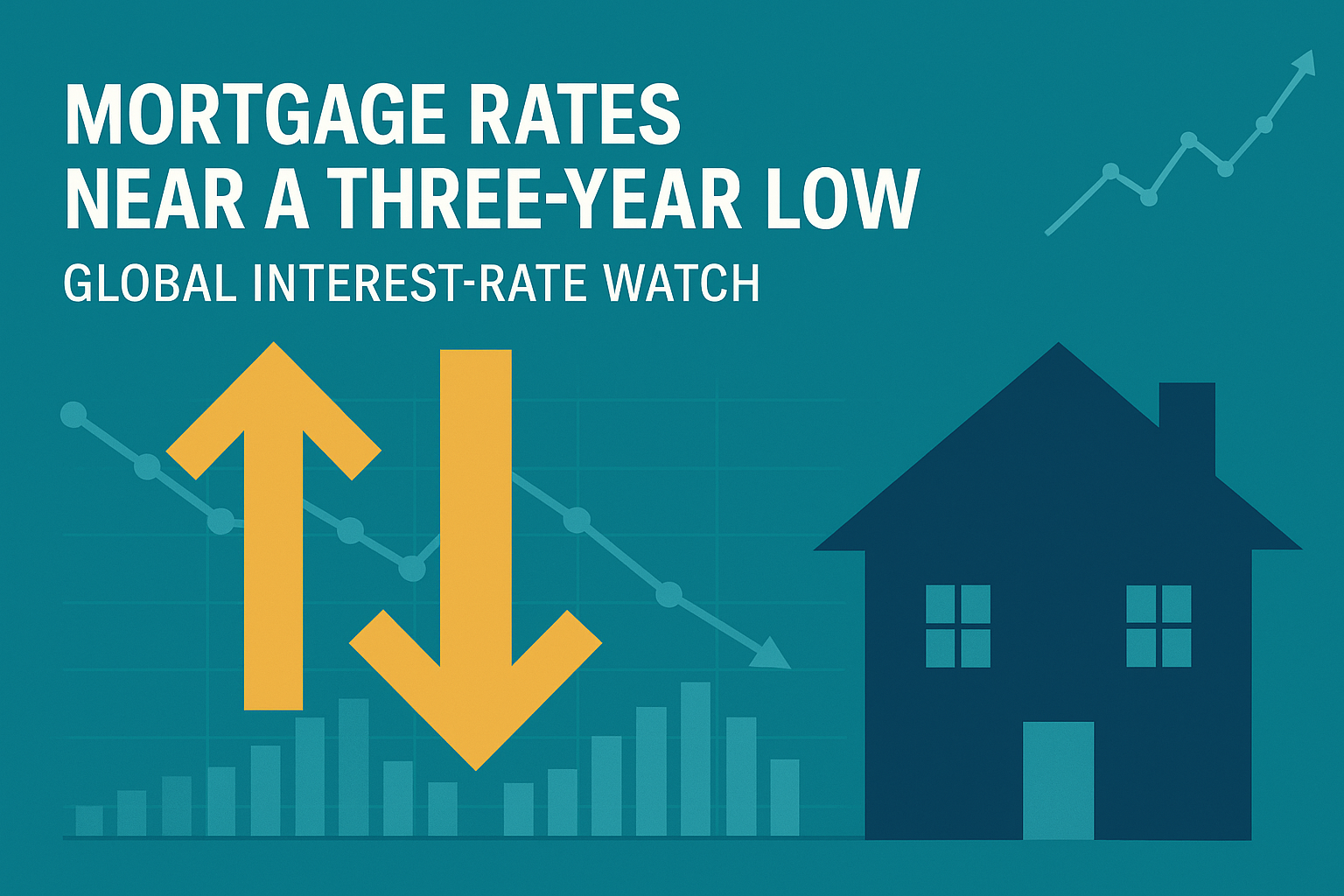
Mortgage Rates Hit a Three-Year Low
The year 2025 is shaping up to be a turning point for global finance. Mortgage rates 2025 have fallen to their lowest level since 2022, signaling relief for homebuyers and borrowers worldwide.
The average 30-year fixed mortgage rate in major markets such as the U.S., U.K., and India has declined by nearly 50 basis points over the past six months. This drop is largely due to cooling inflation and rising expectations of central bank rate cuts later this year.
In the U.S., the Federal Reserve’s dovish guidance has already led lenders to offer lower long-term rates, while in India, the RBI’s neutral stance has stabilized lending costs for housing loans.
Why Are Rates Falling Globally?
The fall in mortgage rates isn’t just a local story—it’s part of a worldwide trend in interest rates. Central banks from Washington to Tokyo are now shifting from aggressive tightening to gradual easing as inflation stabilizes and growth shows signs of fatigue.
Key factors behind the decline:
- Cooling inflation:
After years of price pressures, inflation in most advanced economies has eased close to central bank targets. - Slower economic growth:
Weak manufacturing data and moderating consumer demand have pushed policymakers to rethink aggressive rate hikes. - Geopolitical uncertainty:
Global trade tensions, energy price volatility, and election-year politics have boosted demand for safe-haven bonds, pulling yields—and mortgage rates—down. - Central bank coordination:
The European Central Bank (ECB), Bank of England (BoE), and Reserve Bank of Australia (RBA) are all signaling a pause or a cut in rates, aligning with the Fed’s more accommodative outlook.
Impact on Borrowers and Homebuyers
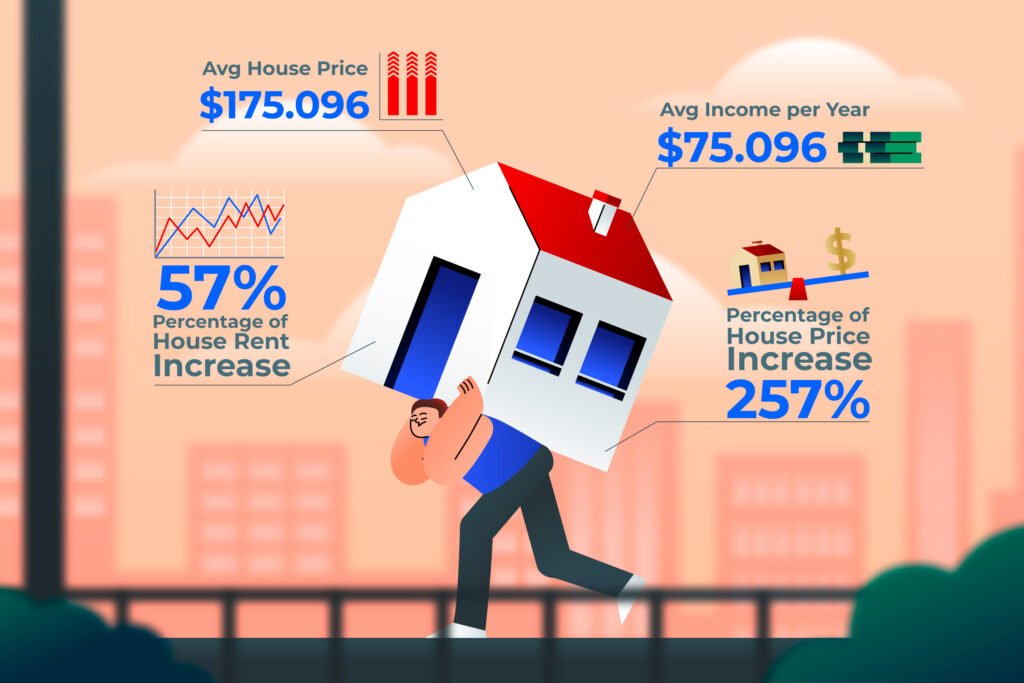
For individuals considering buying or refinancing a home, this is a golden opportunity. Lower mortgage rates mean reduced monthly payments and increased affordability, especially in urban housing markets where prices remain elevated.
Example:
If you’re taking a ₹50 lakh (or $100,000) loan, even a 0.5% rate drop can reduce your EMI (monthly payment) by ₹1,500–₹2,000 per month, saving you ₹3–4 lakh over the loan’s lifetime.
What Borrowers Should Do Now:
- Lock in fixed rates early: Lenders may re-adjust once volatility returns.
- Refinance older loans: If you took a mortgage between 2022–2023, you could save significantly by refinancing.
- Compare across lenders: With competition rising, some banks are offering special promotional rates for new borrowers.
Global Interest-Rate Watch: Who’s Cutting, Who’s Holding?
Central Bank | Current Policy Rate | Trend | Outlook for 2025 |
Federal Reserve (U.S.) | 4.50% | Dovish | Expected cut in Q4 2025 |
European Central Bank (ECB) | 3.25% | Steady | Likely 25 bps cut soon |
Bank of England (BoE) | 4.75% | Cautious | Possible cut by year-end |
Reserve Bank of India (RBI) | 6.25% | Neutral | Monitoring inflation before easing |
Bank of Japan (BoJ) | 0.10% | Dovish | Maintaining yield-curve control |
Reserve Bank of Australia (RBA) | 3.85% | Dovish | May cut in early 2026 |
The synchronized policy shift suggests that global borrowing costs will remain low for the next few quarters, providing breathing space for consumers and investors.

Investor Angle: Bonds, Stocks, and Real Estate
Falling interest rates often have a mixed impact on markets:
- Bond prices rise as yields drop, offering short-term gains to debt investors.
- Equity markets rally, especially in interest-sensitive sectors like housing, banking, and consumer durables.
- Real estate demand picks up, though housing supply constraints could limit affordability gains.
However, investors should remain cautious. If rates drop too quickly, it could indicate underlying economic weakness—potentially hurting corporate earnings in 2026.
Expert Insight
“This cycle of easing is not about stimulus—it’s about stability,” says Dr. Rina Mehta, Chief Economist at Global Macro Advisors.
“Central banks are carefully managing inflation expectations without reigniting the asset bubbles of the past.”
What to Expect Next
Analysts expect mortgage rates to remain near their current lows until early 2026, before inching up again as growth stabilizes. For now, borrowers and investors alike are in a sweet spot—but timing and smart decision-making are key.